
Hex Match
Gimica GmbHPuzzle
4.62.72K Reviews
- Version
- 1.8.0
- Installs
- 1.00M
- Age Rating
- Everyone
Screenshots
Our Review of Hex Match
 Analysis by Appyee
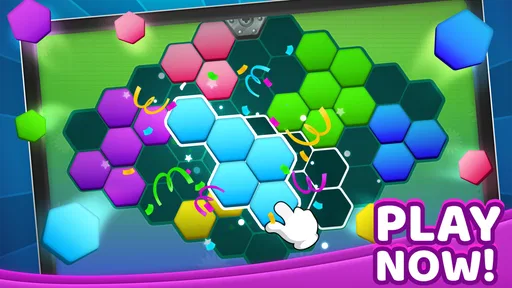
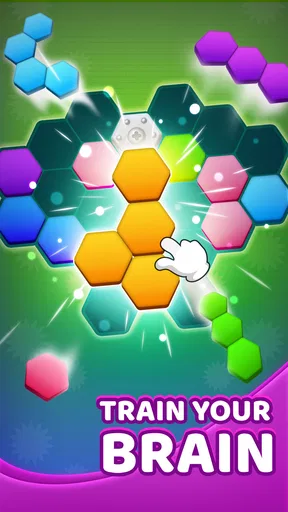
I spent time with Hex Match as a quiet, pick-up-and-play puzzle rather than a game that demands long sessions. Its central idea is easy to understand: place hexagonal blocks on the board and work toward a clean solution. That simplicity is the reason it feels approachable, but it also means the quality of each move matters more than the amount of content surrounding it. When the board starts filling up, a placement that looked harmless a moment earlier can remove the space needed for the next piece.
Developed by Gimica GmbH, this free puzzle game is aimed at everyone and works on Android devices running version 7.0 or later. It has reached more than a million installs, with an average score of 4.6 from roughly eighty-one thousand ratings and about 2.7 thousand written reviews. Those numbers suggest that its straightforward format has found a broad audience, and I can see why: it takes almost no time to learn, yet it gives me enough room to think before committing to a move.
How the puzzle builds momentum
I find that the game’s momentum comes less from flashy rewards than from noticing how one careful placement changes the choices available afterward. In a shared session, that makes it easy to pause and compare ideas without needing anyone to take over the whole puzzle. The same deliberate pace also makes it worth agreeing on simple boundaries before passing a device around.
The first goals are clear, even without a long tutorial
The opening appeal comes from the immediate objective. I do not need to learn a complicated control scheme or remember a story before playing. The board, the available hexagonal pieces, and the empty spaces explain most of what matters. That makes it suitable for a short break, especially when I want something more thoughtful than a reflex game but less demanding than a traditional strategy title.
Early play is mostly about understanding shape and space. A piece may fit in one location, but that does not automatically make it the best location. I quickly found myself looking beyond the current placement and asking which gaps would remain afterward. That small shift—from “can this fit?” to “what will this create?”—is where the game begins to feel like a puzzle rather than simple drag-and-drop decoration.
One useful habit is to pause before placing a large or awkward block. The most obvious open area is not always the safest one. I get better results when I first identify narrow spaces that only a particular shape can fill, then use more flexible pieces around them. This is a practical tactic for avoiding the common mistake of consuming a valuable gap too early.
The game also suits different attention levels. I can play a single board while waiting for a drink, or spend longer examining the arrangement when I am in the mood to plan. It does not require a commitment to a lengthy session, which is a genuine strength for a mobile puzzle. On the other hand, anyone looking for a strong narrative hook, character collection, or a large strategic system will find the opening intentionally bare.
Progress is felt through cleaner decisions
In a game this focused, progress is not only about reaching the next objective. It is also about recognizing patterns that confused me earlier. At first, I tended to fill the center or the largest visible space. Later, I became more careful about preserving room around the edges and keeping future placements possible. That improvement gave the game a modest but satisfying learning curve.
The most useful progress signal is the board itself. A tidy arrangement tells me that my earlier choices were working; a board with isolated pockets tells me I have probably created a problem. This visual feedback is more meaningful than a decorative reward because it connects directly to the puzzle’s logic. I always know why a position feels comfortable or dangerous.
For a better experience, I recommend treating empty space as a resource rather than as unused background. Before each move, I mentally divide the board into areas that are versatile and areas that are difficult to reach. I then try to protect the versatile areas until I know what the less flexible pieces need. This approach is especially helpful when several pieces appear to fit but only one arrangement leaves a workable board.
That said, the sense of progression depends heavily on whether the player enjoys self-improvement. There is no need to master a complicated rule set, but there is value in becoming more deliberate. If a player wants constant new mechanics to announce advancement, the feedback may feel too quiet. For me, the quieter structure works because the challenge comes from making fewer careless decisions.
The difficulty curve rewards patience more than speed
The challenge becomes more noticeable as I stop relying on instinct. A move can be valid and still be strategically poor, and the consequences often appear several placements later. That delayed effect is the main source of tension. I am not racing a timer in my normal approach; I am trying to keep enough options open for the shapes that may follow.
My best results come from resisting the urge to complete a tempting area immediately. Filling one section can make the board look better while reducing flexibility elsewhere. I instead look for placements that serve two purposes: they fit now and preserve a useful route for another piece. This is one of the less obvious lessons of the game, and it makes the simple rules more interesting than they first appear.
Another practical technique is to use the board’s awkward corners as early planning points. If a piece can occupy a narrow pocket without damaging the larger open area, placing it there can prevent that pocket from becoming a late-game problem. Conversely, putting a broad piece into a corner may waste its flexibility. I found that thinking about the next two or three placements, rather than the entire board, gave me a manageable balance between planning and guesswork.
The difficulty can still feel uneven when a position turns bad because of one earlier choice. That is not unusual for spatial puzzles, but it may frustrate players who prefer generous recovery tools. A near-solution can unravel quickly once the remaining spaces no longer match the available shapes. I consider that a fair trade-off for the game’s compact design, although it makes the experience less relaxing for people who dislike restarting or reconsidering a board.
This is also where the game differs from match-three alternatives. Match-three games usually emphasize quick pattern recognition, chain reactions, and immediate visual rewards. Here, the satisfaction is slower and more positional. I spend less time scanning for a colorful combination and more time protecting the board from future blockage. Players who enjoy arranging shapes and planning around constraints will likely prefer this style; players who want rapid cascades may find it restrained.
What keeps me returning, and where the pressure appears
The retention appeal comes from the promise that the next attempt may go better simply because I have understood one mistake. That is a healthy kind of pull when it stays voluntary. I can put the game down after a short session and return later without needing to remember a plot or rebuild a complex strategy. The rules are stable enough to make returning easy.
There is also a useful “one more try” feeling when I know a board failed because of a specific placement. Instead of feeling completely random, the result often points back to a decision I can examine. I may have closed a narrow gap too soon, used a flexible piece where a rigid one was needed, or concentrated too much space in one area. That clarity gives a failed attempt some value.
Still, the same structure can become repetitive. Because the core activity remains focused on hexagonal placement, players who need frequent surprises may lose interest once the basic decision-making pattern becomes familiar. The game is strongest as a compact mental exercise, not as a broad progression adventure. I would choose a more content-heavy puzzle title if my priority were a large campaign, character-driven unlocks, or a constantly changing set of rules.
The free entry point makes it easy to test that fit. The game includes in-app purchases priced from $1.99 to $7.99 per item, so I would approach the optional spending carefully and decide first whether the basic loop already holds my attention. I would not recommend buying anything simply to compensate for a frustrating board. If the placement puzzle itself is not enjoyable, extra spending will not change the central experience.
Its Everyone age rating also matches the accessible presentation and uncomplicated premise. That does not mean every player will enjoy it equally: younger users may need patience to understand why a legal move can be a poor move, while adults looking for a calm distraction may appreciate exactly that low-pressure learning process. It is a good candidate for shared casual play, where one person suggests a placement and another explains why saving a gap might be wiser.
Small decisions matter more than fast hands
One of the strongest ways to play is to separate observation from action. I first inspect the available spaces, then identify the most restrictive piece, and only afterward place anything. This prevents the common habit of moving the first block that appears to fit. It also makes the game feel less like trial and error because each move has a reason behind it.
I also recommend leaving a buffer around important areas. A completely packed section can look efficient, but a little breathing room may allow a later piece to connect without forcing an awkward detour. The trade-off is that preserving space can feel wasteful in the short term. That is precisely why it works as a test of judgment: the best move may not produce the most satisfying immediate visual result.
When I am playing casually, I use a simpler rule: if two placements seem equally safe, I choose the one that keeps more different shapes possible afterward. This is a useful way to manage uncertainty without pretending I can predict every future piece. It gives me flexibility, which is usually more valuable than completing one small area early.
These habits also explain who should skip the game. If you want a puzzle that depends on speed, sound cues, elaborate combos, or a constant stream of unlocks, this may feel too measured. If you dislike losing because of a decision made several moves earlier, the lack of immediate recovery may be tiring. I would also look elsewhere if I wanted a competitive experience built around rankings or direct multiplayer interaction.
For everyone else, the compact format is appealing. It fits into the gaps of an ordinary day without requiring a tutorial session or a large time investment. I can use it to reset my attention between tasks, but I would avoid playing when I need to stay mentally available for something else; the quiet concentration can become more absorbing than expected once the board reaches a difficult stage.
Version, access, and everyday practicality
The current version is 1.7.0, and the Android requirement of 7.0 or newer keeps the compatibility range broad. That matters for people using an older phone who want a lightweight puzzle option rather than a demanding action game. Since it is free to start, the sensible approach is to install it, play enough boards to see whether the spatial reasoning feels satisfying, and only then consider any optional purchase.
In everyday use, I see it working particularly well during a commute, a waiting-room visit, or a short evening break. A realistic routine would be to play one puzzle while waiting for an appointment, stop when the board becomes mentally distracting, and return later with a fresh view. Because the objective is easy to remember, there is little friction in resuming the activity.
It is less suitable as background entertainment. I cannot give it half my attention and expect the same results, because a careless placement can shape the entire remainder of the board. This is not a flaw, but it is important to understand the distinction: the game looks casual, yet its better moments come from focused observation rather than passive tapping.
My verdict on its long-term progression
After playing it as both a quick distraction and a more deliberate puzzle, I think the progression succeeds when measured by improving judgment. The early goals are immediately understandable, the board provides honest feedback, and the difficulty grows through the consequences of placement rather than through a complicated rulebook. That gives the game a clean identity.
Its limitations are equally clear. The central loop may not provide enough variety for players who expect frequent unlocks or dramatic changes in challenge. A failed arrangement can also feel unforgiving, particularly when one earlier choice leaves no comfortable answer later. The in-app purchase range means I would keep spending optional and based on genuine enjoyment rather than frustration.
My recommendation is strongest for people who like calm spatial puzzles, short sessions, and the satisfaction of correcting their own habits. Compared with match-three games, it is slower, more deliberate, and less dependent on chain reactions. Compared with larger puzzle adventures, it is easier to enter but offers a narrower form of progression. Its real strength is the way a few simple placements can turn an ordinary board into a thoughtful problem.
If that kind of focused decision-making sounds appealing, this free game is worth trying on a compatible Android device. I would approach it as a tidy mental workout rather than an endless content machine. For me, the best reason to keep it installed is not a flashy reward system; it is the small satisfaction of seeing a board that once seemed awkward become manageable because I learned to protect the right spaces.
Verdict
Strengths of Hex Match
- Simple hex-based gameplay is easy to learn but remains mentally engaging.
- Short rounds make it convenient for quick play sessions.
- Clean visuals keep the board easy to read on smaller screens.
- Gradual difficulty provides a satisfying sense of progression.
- Offline play is useful when you have no internet connection.
Limitations of Hex Match
- Some levels can feel repetitive after extended play sessions.
- Later puzzles may rely more on trial and error than strategy.
- Limited variety may not satisfy players seeking multiple game modes.
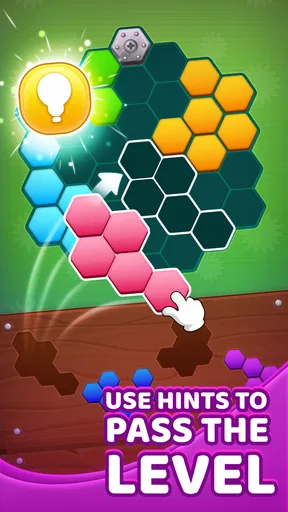
- Hints or extra moves may be restricted or tied to in-app purchases.
- The minimalist presentation may feel too plain for some players.
Other Releases by Gimica GmbH
View All


Similar Picks in This Category
View All
Block Blast!
HungryStudio4.8

Braindom: Brain Games Test
Lahana Game Studio4.6

AMAZE!
CrazyLabs LTD4.6

Sudoku - Classic Sudoku Puzzle
Oakever Games4.7

Art Puzzle - Puzzle Games
Easybrain4.8

Amaze GO!
Oakever Games4.9
Frequently Asked Questions
What is Hex Match and how do you play it?
Hex Match is a relaxing puzzle game built around arranging and matching colorful hexagonal pieces. During a level, you place the available shapes on a board and try to create matching groups or complete the required patterns. The rules are easy to understand, but later stages demand careful planning because the board has limited space and a poorly placed piece can block future moves.
Is Hex Match free to download and play?
Hex Match can generally be downloaded and played for free, making it easy to try without an upfront purchase. However, the game may include optional advertisements, rewarded videos, or in-app purchases depending on the version and platform. These extras can provide hints, remove advertising, or offer additional resources, but they are not normally required to enjoy the basic puzzle experience.
Does Hex Match work without an internet connection?
Many of Hex Match’s core puzzle levels can be played offline, which is useful when traveling or when you have limited mobile data. Some features may still require an internet connection, including advertisements, cloud synchronization, leaderboards, special events, or purchases. It is best to open the game once while connected so its content can load correctly before playing offline.
Is Hex Match suitable for children and casual players?
Hex Match is suitable for most casual players because its controls are simple, the pace is generally unhurried, and there is no complicated story or extensive tutorial to learn. It can also encourage visual recognition and strategic thinking. Parents should nevertheless review the game’s advertising and purchase settings, especially if children will use a device connected to a payment account.
Does Hex Match offer enough content for long-term play?
Hex Match is designed for short sessions as well as longer puzzle-playing periods. Its appeal comes from gradually more demanding boards, the satisfaction of clearing combinations, and the challenge of improving your decisions. Whether it remains engaging over time depends on your preference: players who enjoy repetitive, relaxing logic puzzles may find plenty to do, while others may eventually want more variety or competitive features.
Play our best games!


